

Your pitch deck should be a label, not the recipe
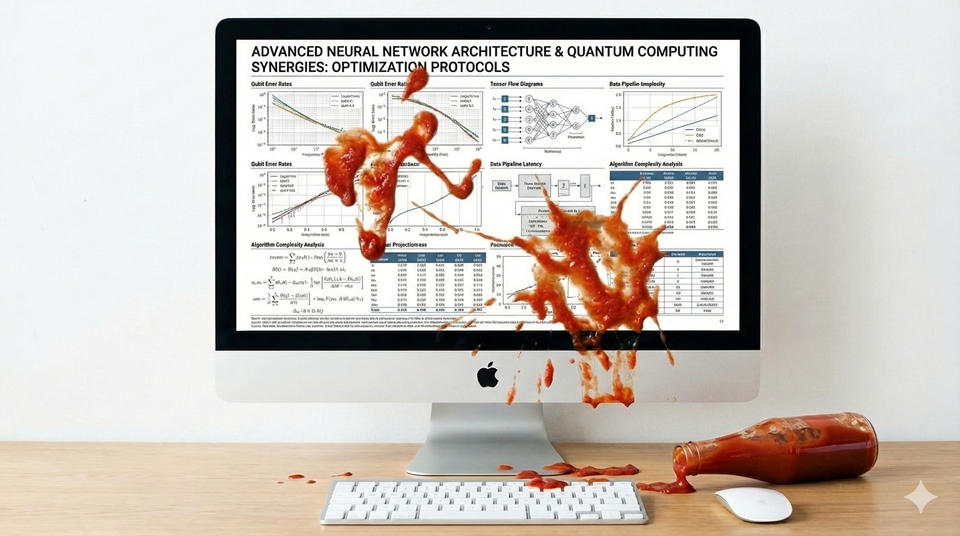
Imagine walking into a supermarket to grab a bottle of Heinz Tomato Sauce. Simple, familiar, fast. Now imagine that before you can grab it, someone makes you sit through 30 slides explaining every ingredient, the chemistry of acidity, the production process in full, and every competitor’s strategy.
Would you buy the sauce? Or would you walk out, annoyed, confused, and wishing someone had just told you what matters via a simple label?
I’ve seen founders spend weeks perfecting slides no one actually reads. I've seen countless iterations on slides that nobody sees. Even with plenty of proven pitch deck examples out there, it’s easy to fall into the trap of thinking yours needs to be different.
3 minutes and 44 seconds
Investors spend shockingly little time on your deck. On average, they view a deck for just 3 minutes and 44 seconds before deciding whether to move forward (DocSend research summary). Decks that stay within 10–15 slides outperform longer ones because attention drops sharply as length increases (SlidesVamp report; Astel Ventures, 2023). Once you hit 25-30 slides, less than half of investors will view the entire presentation (PitchDeckCreators, 2023).
Human attention is a finite resource. Research indicates that when the volume of information surpasses an individual's cognitive capacity, the quality of their decisions begins to deteriorate. As highlighted by Meyer et al. (2023) in Frontiers in Psychology, this occurs because the depletion of attentional resources forces a shift away from deep, systematic processing toward a reliance on superficial cues and mental shortcuts.
The double-layer of information overload
To win the pitch, you have to overcome two levels of psychological friction:
- The Investor Level (The Filter): The investor’s brain is already exhausted from seeing 50 decks that week. They are actively looking for "mental shortcuts" to filter you out. If your deck looks like a wall of text, their brain classifies it as "high effort" and stops processing the actual value.
- The Slide Level (The Signal): When you crowd a slide with data, you create "cognitive noise." Instead of the investor focusing on your $5M ARR, their brain is busy trying to decode a complex chart or a tiny font. You have effectively hidden your best cues behind a curtain of clutter.
Your audience isn't you
Technical founders often dump every bit of analysis, graph, model, tech stack, and architectural slide into their deck because it all matters in their head. But your investors are not you. They are not living in your product every day. They do not have the context you do, and they definitely do not have the time.
Investors care about:
- The pain: Is this a massive, relatable problem I can grasp in 10 seconds?
- The edge: Is the solution clear, unique, and obviously better than the status quo?
- The prize: Is the market big enough to return the entire fund?
- The proof: Is there undeniable momentum (traction) that shows this is a moving train?
Investors don't care about the molecules of your sauce. They care about whether people will buy it.
Yes, the technical detail matters. Yes, your tech stack matters. Yes, the processes matter. But not in the investor pitch deck.
The moment someone chooses to go deeper is when you give them more. You can always drill down, but I have never seen someone successfully drill up from 40 slides of overloaded slides to clarity.
Reference a proven example
Lead with impact. Start with the core problem and solution. Make it digestible. Think of slide design as attention management, not fluff – it guides focus, reinforces your message, and helps investors absorb what you do and why they should care. Remember how much information is on a sauce label? Not much.
Use a proven pitch deck example, e.g. Sequoia as a guide to start. If you already have an investor pitch deck, starting over with a proven flow can be easier than retrofitting. At the same time, convey your message in the best possible way, for instance this is a good take on using the Sequoia deck as a starting point.
Short decks win because they respect attention. If your slides are still a busy buffet instead of refined taste, we can help you trim, focus, and make every word count.
Next time: customers
There is a mix of similar and different rules when you are pitching to customers. That is a story for another blog.
Member discussion